Reverse-Cycle vs Cooling-Only: Which Should You Buy
5 min read
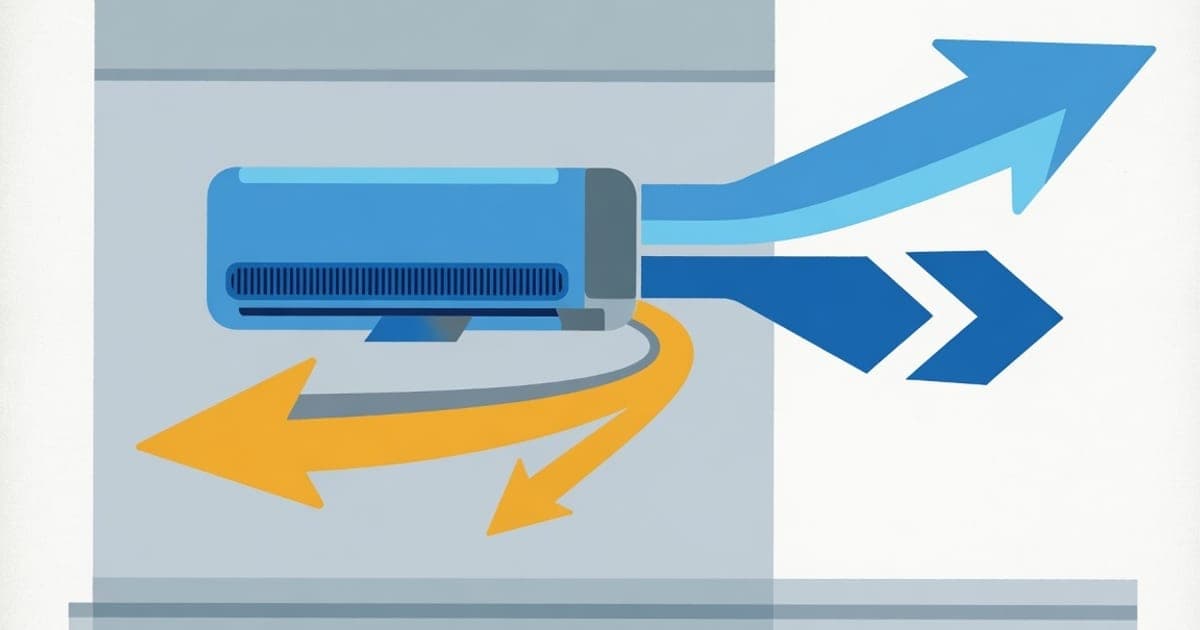
Reverse-cycle air conditioners can both cool and heat a room, while cooling-only units do exactly what the name says and nothing more, and the price gap between the two is smaller than most buyers expect. That narrow gap is why reverse-cycle has become the overwhelming default choice in new installations across Australia, but cooling-only still has a real place in specific situations, and understanding the trade-off properly will save you from paying for a feature you never use, or worse, missing one you needed.
How reverse-cycle actually works
A reverse-cycle unit is a heat pump that can run its refrigeration cycle in either direction. In cooling mode it extracts heat from inside the room and rejects it outdoors, exactly like a cooling-only unit. In heating mode it does the reverse, extracting heat from the outside air, even on a cold day, and pumping it indoors. This is fundamentally different from and far more efficient than resistive electric heating: because it is moving existing heat rather than generating new heat from electrical resistance, a reverse-cycle unit typically delivers three to four units of heating for every one unit of electricity it consumes, a ratio expressed as its coefficient of performance. A cooling-only unit simply lacks the reversing valve and control logic that makes this possible, and physically cannot heat a room at all.
The price gap is smaller than it looks
Because reverse-cycle and cooling-only units share almost all the same core components, compressor, coils, fan, cabinet, the manufacturing cost difference is modest, usually a few hundred dollars at most across comparable capacities. This is the main reason reverse-cycle has become the default: most buyers reasonably conclude that a small extra outlay for year-round capability beats saving a little now and having zero heating option later. On the used and ex-display listings here, this price gap narrows further, sometimes to almost nothing, because the used market simply carries far more reverse-cycle stock than cooling-only stock.
When cooling-only still makes sense
Cooling-only remains the right choice in a genuinely narrow set of circumstances: a room that already has effective heating from another source, such as a wood heater, ducted gas or a hydronic system, where adding reverse-cycle heating capacity would be redundant; a space used only in summer, like an outdoor-facing sunroom or a seasonal workshop; or a commercial application such as a server room or shop cool room where heating is never wanted and could even be actively unwanted. Outside those specific cases, reverse-cycle is almost always the better long-term buy, particularly given how Australian climate zones vary: even in Queensland and the Northern Territory, winter nights get cold enough that heating capability has real value.
Efficiency in heating mode varies with climate
Reverse-cycle heating efficiency drops as outdoor temperature falls, because there is less ambient heat available to extract. In mild-winter regions like Perth, Sydney and Brisbane, this is barely noticeable and reverse-cycle heating comfortably outperforms every other electric heating option. In genuinely cold regions, alpine areas, the Southern Tablelands, parts of Tasmania, capacity and efficiency both drop meaningfully on the coldest mornings, and it is worth checking a unit's rated heating capacity at low outdoor temperature, not just its headline figure, before relying on it as a sole heat source in a cold climate. This is one of the places where inverter technology matters most, because an inverter compressor sustains efficient low-load heating far better than a fixed-speed unit cycling on and off through a cold night.
Star ratings differ between the two modes
An air conditioner's energy star rating is calculated separately for cooling and, on reverse-cycle units, for heating, and the two ratings are not always the same number. A unit can carry a strong cooling rating and a merely average heating rating, or occasionally the reverse. If heating performance matters to your household, check both figures on the energy label rather than assuming a high overall rating covers both modes equally.
Installation cost is close to identical
It is worth being clear that the labour cost of installing a reverse-cycle unit is essentially the same as installing a cooling-only unit of the same capacity: the mounting bracket, refrigerant line set, electrical circuit and licensed refrigerant work are all identical regardless of which mode the unit supports. The only cost difference sits in the hardware itself, the small manufacturing premium mentioned above, not in the installer's time on site. This is another reason the cooling-only option rarely saves buyers as much as they expect once a full quote is on the table, and it is worth asking an installer to price both options side by side before assuming cooling-only is the budget choice.
Checking mode capability on a used unit
When shopping used and ex-display stock, do not assume from the remote control alone that a unit is reverse-cycle: some cooling-only remotes are shared across a manufacturer's range and display a heat icon that simply does nothing on that particular model. Confirm mode capability against the model number and manufacturer specification sheet, the same way you would confirm refrigerant type or rated capacity, rather than trusting the remote or a seller's description alone.
Resale and buyer demand favour reverse-cycle
If resale value or rental appeal is a factor, reverse-cycle is the safer purchase almost everywhere in the country. Buyers and tenants overwhelmingly expect heating capability as standard now, and a cooling-only unit, even a good one, is a harder sell second-hand outside of the narrow use cases above. When browsing listings, reverse-cycle units also tend to attract more enquiry, which is worth keeping in mind if you are weighing up buying used stock with an eye to a future upgrade or on-sell.
Making the decision
For the overwhelming majority of Australian homes, reverse-cycle is the sensible default: the running-cost efficiency in heating mode alone usually justifies the small price premium within a couple of winters, and it future-proofs the room against needing a separate heater later. Reserve cooling-only for the specific situations above, where heating genuinely will not be used, and always double-check the model number and mode capability directly rather than assuming from the listing photo, since indoor units for both types often look identical from the outside.