R32 vs R410A: What Australian Techs and Buyers Need to Know
5 min read
R32 and R410A are the two refrigerants you will meet in almost every residential and light commercial split system sold in Australia over the last fifteen years, and the difference between them matters more than most buyers realise. R32 is the newer, lower-emissions gas that has effectively replaced R410A in new equipment since around 2019, but a huge number of R410A systems are still running, still being serviced, and still turning up second-hand. Knowing which one you are dealing with changes how the unit is charged, what a service call costs, and whether a mismatched replacement part will even work.
What R32 and R410A actually are
R410A is a blend of two refrigerants (R32 and R125) mixed in fixed proportions, developed in the 1990s as the ozone-friendly replacement for R22. R32 on its own is one of the two components of that blend, used alone rather than mixed. Because R32 is a single-component refrigerant rather than a blend, it behaves more predictably during charging and recovery: a blend like R410A can fractionate (the two components separate slightly) if it leaks slowly as a gas, which complicates topping up a system that has lost some charge. A straight R32 system does not have that problem, which is one of the quieter reasons manufacturers moved to it.
Global warming potential is the real driver
The switch from R410A to R32 was not a performance decision, it was a regulatory one. R410A has a global warming potential (GWP) of a little over 2,000, meaning a kilogram of it released to atmosphere traps roughly two thousand times the heat of a kilogram of carbon dioxide over a hundred years. R32 comes in at around 675, roughly a third of that. Australia is a signatory to the Kigali Amendment to the Montreal Protocol, which schedules a phase-down of high-GWP refrigerants over the coming decade, and R32 was the industry's first widely adopted step toward compliance. Expect the next step, already visible in some commercial equipment, to be R290 (propane) and other very low-GWP options, but for split systems R32 is currently the mainstream standard.
The flammability difference matters for how it is handled
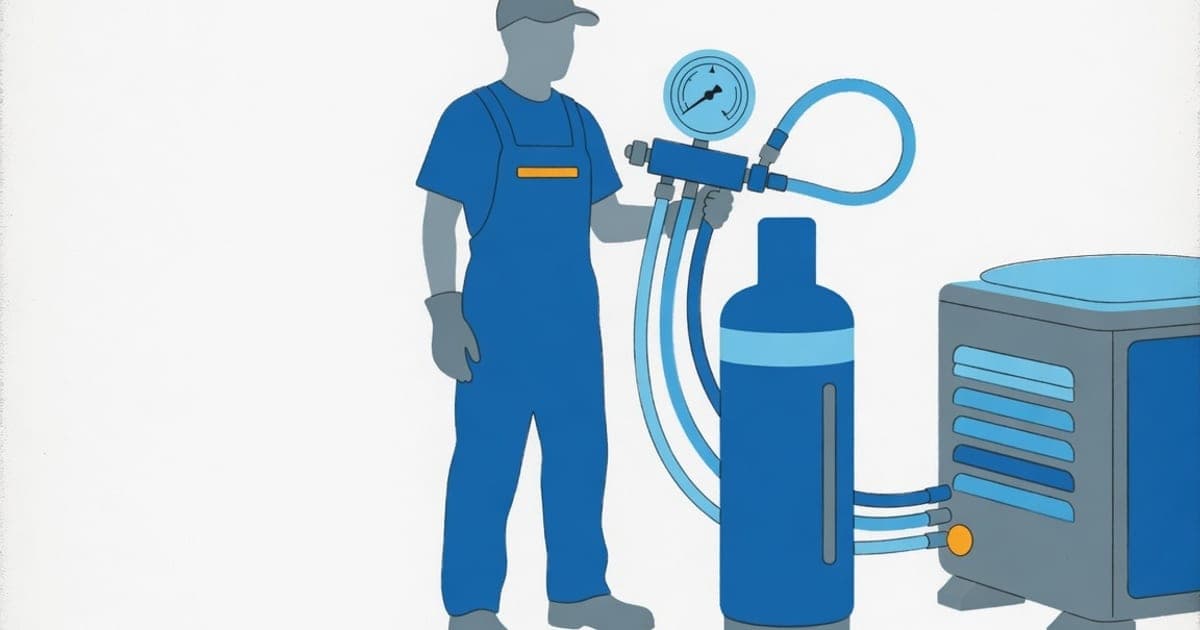
R410A is classified A1: non-flammable. R32 is classified A2L: mildly flammable, meaning it will burn under specific conditions but has a low burning velocity and is difficult to ignite compared with something like propane. This is not a reason to be alarmed about an R32 split system in your home; the risk is managed entirely at the design and installation stage through charge limits, room size rules and safe soldering practices, and installers are required to work to AS/NZS 5149 on this exact point. Where it matters to you as a buyer is servicing: a technician working on an R32 system needs to use A2L-rated recovery and charging equipment and follow different brazing and leak-testing procedures than they would on R410A. If you are getting quotes on a used split system from the marketplace, it is worth confirming which refrigerant it runs before the tech turns up, so they bring the right gear.
Charge size and efficiency
R32 systems typically run a smaller refrigerant charge than an equivalent R410A system for the same cooling capacity, partly because R32 has a higher volumetric refrigeration capacity per kilogram. That smaller charge is part of why R32 systems are usually cheaper to gas up from empty than R410A units of the same size. Energy efficiency is broadly comparable between the two refrigerants themselves; the bigger driver of running cost is whether the compressor is inverter or fixed-speed, not which gas it uses.
Can you convert an R410A system to R32?
No, not in any practical sense, and nobody licensed will do it for you. The compressor, expansion device and pipe sizing in an R410A unit are engineered around R410A's specific pressure and thermodynamic behaviour. Retrofitting R32 into an R410A system risks compressor damage, seal incompatibility and voids every safety certification the unit ever had. If a listing or a private seller tells you a unit has been "converted" to R32, treat that as a hard pass rather than a feature. The correct path is a full replacement, not a refrigerant swap.
What this means when buying second-hand
Most used split systems circulating through classifieds and clearance sales in Australia right now are R410A units installed roughly 2010 to 2020, sitting alongside a growing supply of ex-display and decommissioned R32 units from newer builds. Neither is automatically the better buy: an R410A unit in good condition with a healthy compressor is still a sound purchase, and parts, gas and techs who service R410A remain widely available for now. What you should ask before buying is the same regardless of refrigerant: how to check a second-hand condenser for the signs of a slow leak, seized compressor or corroded coil, because a refrigerant leak is a refrigerant leak whichever gas is behind it.
Servicing and the licence requirement
Whichever refrigerant is in the system, only someone holding a current refrigerant handling licence under the Australian Refrigeration Council's ARC scheme is legally permitted to add, recover or work on the sealed refrigerant circuit. This is a Commonwealth requirement, not a state one, and it applies equally to R32 and R410A. A DIY top-up, even by a competent handyman, is both illegal and a fast way to overcharge or contaminate a system.
The bottom line
R32 is the current standard because it cuts the climate impact of a leak by roughly two-thirds compared with R410A, at the cost of a mild flammability classification that installers and technicians already manage as routine practice. Neither refrigerant makes a used unit a bad buy on its own; the compressor's condition, the coil's condition and a clean service history matter far more than which gas happens to be in the line. If you are shopping the used and ex-display listings for a split system, ask the seller which refrigerant it runs, confirm the service history, and price in a professional regas and safety check as part of the deal rather than an afterthought.