Multi-Head vs Single Split: Sizing a Whole House System
5 min read
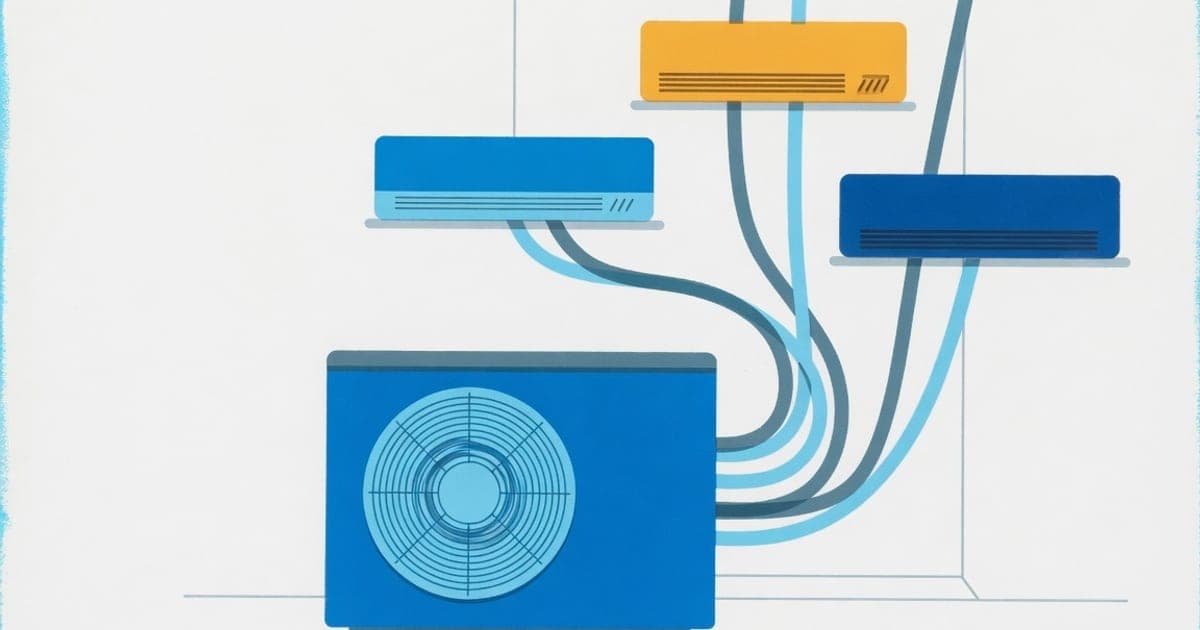
Cooling several rooms in an Australian home comes down to a genuine three-way choice: a separate single-head split system in each room, one multi-head system running several indoor units off a single outdoor condenser, or a fully ducted system. Multi-head sits in an interesting middle position between the other two, and understanding how it actually behaves under real household use, not just its brochure specifications, is the key to choosing correctly.
How a multi-head system is built
A multi-head, or multi-split, system uses one larger outdoor condenser connected by refrigerant piping to two, three, four or occasionally more indoor units, each of which can usually be set to a different temperature and run independently. This is different from ducted air conditioning, which uses one indoor fan coil unit and a network of ducts to distribute conditioned air to multiple zones from a single point; multi-head instead puts a genuine indoor unit, and independent temperature control, in each room, more like several single splits sharing one outdoor unit than like a scaled-down ducted system.
The simultaneous-use derating problem
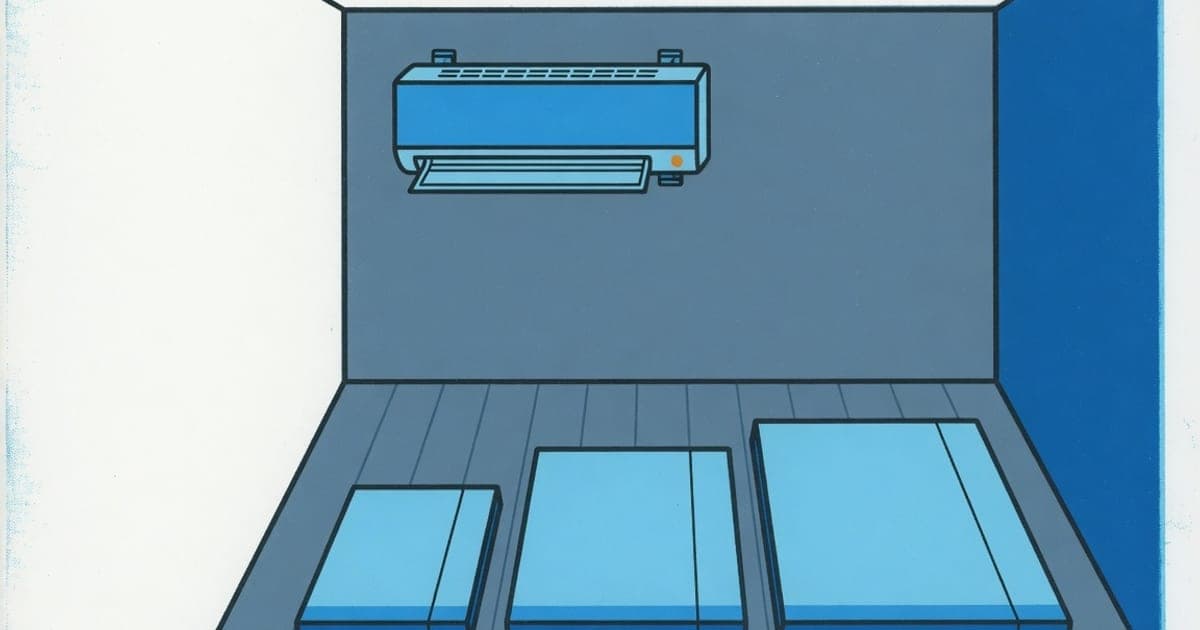
This is the detail that catches out the most buyers. A multi-head outdoor unit's total rated capacity is almost always lower than the sum of what each indoor head could theoretically deliver if run flat out individually. A system advertised with four indoor heads each rated at a nominal capacity does not necessarily deliver the full combined total if all four are running hard on the same stinking hot afternoon; the outdoor unit has a genuine capacity ceiling and shares it across whichever heads are actively calling for cooling. In practice this rarely causes a problem if your household's real usage pattern has, say, the living room running hard during the day and bedrooms running at a lower load overnight, because peak demand is naturally staggered. It becomes a real issue if every room in the system is likely to be run hard at the same time, such as multiple bedrooms during a heatwave with everyone home, in which case the system may struggle to satisfy every zone simultaneously.
Sizing each zone properly still matters
Even though the outdoor unit is shared, each indoor head still needs to be sized correctly for its own room using the same kW-per-square-metre approach as a standalone split. Undersizing an individual indoor head to save money within the system total is the same mistake as undersizing a standalone split, just spread across more rooms: that particular room will run constantly and never quite satisfy the thermostat, regardless of how much spare capacity sits in the other heads.
Comparing running cost against individual splits
Multi-head systems generally carry a somewhat lower total running cost than the equivalent number of fully independent single splits, because a single larger outdoor unit is often more efficient overall than several smaller compressors, and virtually all multi-head systems on the market use inverter compressors that modulate output smoothly across whichever combination of heads is calling for conditioning at any given moment. The efficiency gap between multi-head and individual splits is smaller than the gap between either option and older fixed-speed equipment, so the inverter question matters more to your running cost than the multi-head-versus-individual-split decision on its own.
Weighing multi-head against a single ducted system
For four or more rooms, it is worth comparing multi-head directly against a ducted system, because the two options solve the same whole-house problem differently. Ducted air conditioning generally delivers a more uniform, less visually intrusive result, with no indoor unit visible on any wall, but every zone shares airflow from one central fan coil, and running a single zone in isolation is typically less efficient than running one dedicated indoor head under multi-head. Multi-head keeps each room's indoor unit visible on the wall but gives genuinely independent, efficient control over each space, and it is usually the more cost-effective option for a smaller number of rooms, roughly two to four, where a full duct installation would be overkill.
Star ratings and multi-head
When comparing energy star ratings between multi-head systems, check whether the rating shown is for the outdoor unit paired with a specific combination of indoor heads, because changing which or how many indoor heads are connected to a given outdoor unit can change the effective efficiency of the whole system. This is more relevant to multi-head than to a standalone split, where the rating applies straightforwardly to the one indoor-outdoor pairing.
Noise, placement and manufacturer pairing
A multi-head outdoor unit concentrates all the compressor noise at a single point rather than spreading it across several smaller outdoor units, which is worth thinking through if the only viable outdoor location sits near a bedroom window, a neighbouring fence line or an outdoor entertaining area. A single larger unit is not necessarily louder overall than several smaller units combined, but the noise is concentrated rather than distributed, so placement deserves more thought than it would with individual splits scattered around the house. It is also worth knowing that indoor heads on a multi-head system generally need to come from the same manufacturer's range as the outdoor unit, and often the same generation of that range, so mixing and matching indoor heads from different brands or eras is rarely straightforward the way it can sometimes be arranged with fully independent single splits.
Buying used multi-head equipment
A used multi-head outdoor unit is a bigger commitment than a used single split, both because the outdoor unit itself is a larger and more expensive component and because it needs to be matched correctly to however many indoor heads you plan to run, with correct piping runs to each. Apply the same condenser inspection checklist before buying, and confirm with a licensed installer that your intended room layout and pipe run lengths are workable for the specific outdoor model before you commit, since maximum pipe length and height difference between the outdoor unit and each indoor head are genuine engineering limits, not just installer preference. Browse multi-head and single split options on the marketplace with your room count and layout in mind before deciding which approach suits your house.