Split System Capacity Sizing for Australian Rooms: A kW Guide
4 min read
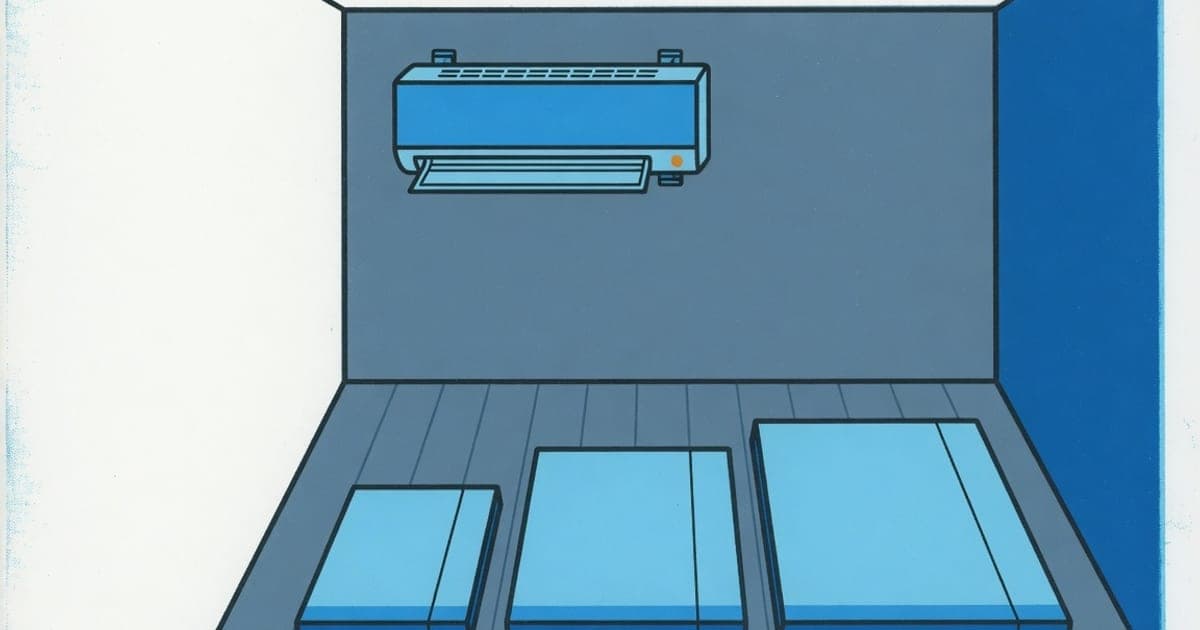
Getting the capacity right on a split system matters more than almost any other buying decision, because both an undersized and an oversized unit cost you money in different ways, and neither fault is obvious until the unit is already installed. The rule of thumb most Australians reach for, roughly a hundred watts of cooling capacity per square metre of floor area, is a reasonable starting point but it ignores climate zone, ceiling height, glazing and insulation, all of which move the real number by a wide margin.
Sizing also depends on whether you actually need heating capacity at all: the kW figures below apply to cooling and, on a reverse-cycle unit, heating draws on the same rated capacity in the opposite direction, so it is worth settling that question before you lock in a target number.
The baseline formula
For a room with standard 2.4 metre ceilings, reasonable insulation and a moderate amount of glazing, a workable starting benchmark for cooling is 125 to 150 watts per square metre in temperate zones (Melbourne, Adelaide, Hobart, Canberra) and 150 to 180 watts per square metre in hot and humid zones (Brisbane, Darwin, tropical and subtropical Queensland). A 20 square metre living room in Melbourne lands around 2.5 to 3.0kW of cooling capacity; the same room in Darwin wants closer to 3.0 to 3.6kW. Heating capacity for reverse-cycle units generally needs slightly more headroom again in the coldest inland and alpine-adjacent regions, because heating load is driven by the gap between outdoor temperature and your target indoor temperature, which is larger on a 2°C Canberra morning than the equivalent summer cooling gap ever gets.
Adjustments that move the number meaningfully
Ceiling height above 2.4 metres adds volume the base formula does not account for; add roughly 10 percent capacity for every extra 300mm. A room with a large north or west-facing window in an unshaded position needs a meaningful uplift, commonly 15 to 25 percent, because that glass is a direct heat-load path in the afternoon. Poor roof insulation, a common issue in older Australian housing stock, can add another 10 to 15 percent. Conversely a well-shaded, well-insulated room with modest east-facing glazing can sit comfortably at the lower end of the range or slightly under it. None of these adjustments are exact science; they are the reason a proper heat load calculation by a licensed installer beats a rule of thumb, but the rule of thumb gets you close enough to sanity-check a quote or a listing before you commit.
Why undersizing is the more common mistake
Buyers chasing a bargain, including on the used and ex-display listings here, often size down to save money on the unit itself, reasoning that a smaller system just takes a little longer to cool the room. In practice an undersized unit runs at or near full capacity almost constantly on hot days, never quite reaching setpoint, which both wastes energy and shortens compressor life through sustained high load. If you are deciding between capacities and the room sits between two standard sizes, the cheaper long-run choice is almost always to size up rather than down.
Why oversizing is not free either
The opposite mistake, buying a larger unit "to be safe," has its own cost. An oversized split system cools the air fast enough to satisfy the thermostat before it has properly removed humidity from the room, which is why an over-capacity unit can leave a space feeling cold but clammy. It also short-cycles, switching on and off more frequently, which is harder on the compressor over years of service than steady running at a well-matched load. This is one of the strongest arguments for an inverter compressor over a fixed-speed one: an inverter unit modulates its output rather than switching fully on and off, which forgives a slightly oversized selection far better than fixed-speed equipment does.
Sizing a whole house rather than one room
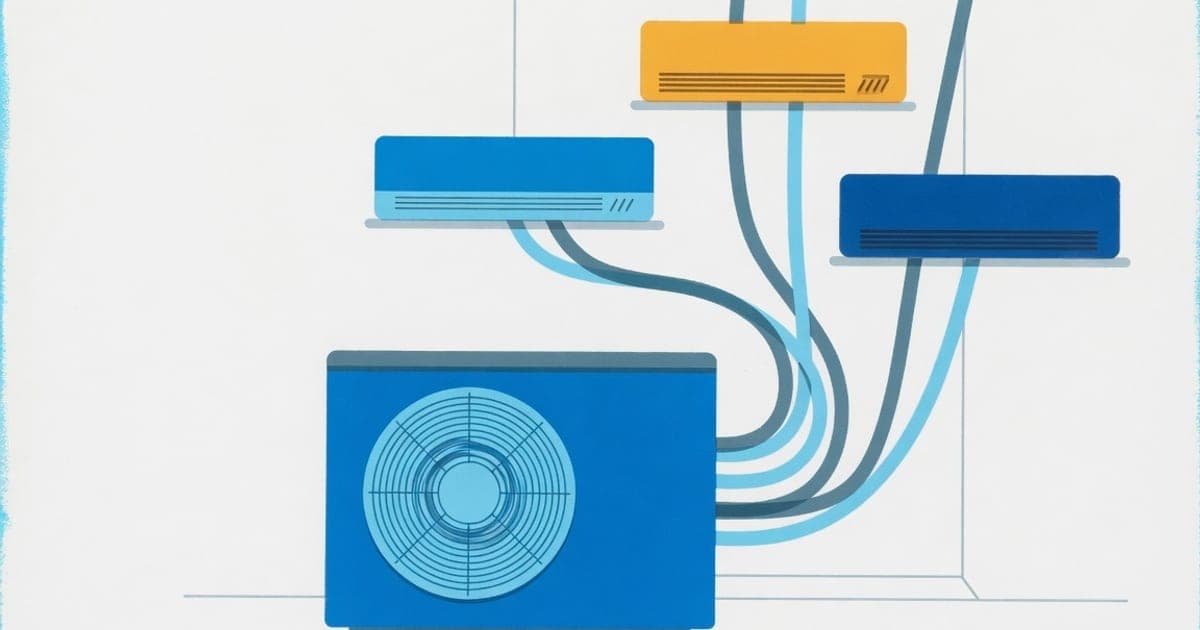
If you are pricing out more than a couple of rooms, room-by-room split system sizing quickly becomes worth comparing against a multi-head system serving several rooms from one outdoor unit, because the sizing maths for simultaneous operation across multiple heads is genuinely different from simply adding up each room's individual number. Get that comparison sorted before you buy hardware, because the outdoor unit choice is not easily reversible.
Reading a listing's stated capacity honestly
Every split system is labelled with a cooling and heating capacity in kW, usually on the indoor unit's rating plate and in the manufacturer spec sheet. When buying second-hand, confirm that number against the actual model number rather than trusting a seller's description, because "a 2.5kW unit" written from memory is sometimes actually a 2.0 or a 3.5. Cross-check the model number against the manufacturer's published specifications, and while you have the spec sheet open, note the energy star rating alongside the capacity, since a correctly sized but poorly rated unit still costs more to run than it needs to.
Climate zone matters more than most calculators admit
Generic online sizing calculators often use a single national average, which flatters cooler southern climates and undersizes for the north. If you are in Cairns, Darwin, Townsville or similar, lean toward the top of every range in this guide, and do not be surprised if a local installer's heat load calculation comes in noticeably higher than a capital-city rule of thumb would suggest. Sizing correctly the first time, using either this guide or a proper heat load calculation, is the difference between an air conditioner that quietly does its job for fifteen years and one that runs hot, loud and expensive from day one. Once you have a target kW figure, browse listings filtered to that capacity range rather than shopping on price alone.